
Hello all and welcome back! Today’s article is about something most people don’t do as often or as well as they should, which is an unfortunate fact considering more due diligence invested at this activity directly equates to more winning.
The activity I am referring to is, of course, playtesting.
A few weeks ago, I made a Magical resolution to improve both the frequency and quality of my playtesting.
Realizing that one needs to go back to the basics and improve their testing is never a fun place to be because it always arises from a realization that one wants to improve their game. While realizing that one’s game needs some help and some work is never the greatest feeling for the old ego, it is ultimately the first step along the road of improving one’s game.
If you are like me, playtesting often feels like a chore that one is obligated to do to not fall behind. Playing games with one known deck against another repeatedly can get boring. Obviously, if we frame playtesting as being a boring activity that when neglected punishes us, our opinion of it will be negative.
When I was preparing for Pro Tour Return to Ravnica, I was the only person in Michigan who actually needed to test Modern at that time. D.J. Kastner was kind enough to run through the gauntlet with me, but the experience was basically the opposite of fun or enjoyable. On top of that, despite the amount of time we put into playing games, I am pretty sure our shared preference for blue decks ultimately tainted our results in such a way that the "testing" we did was actually counterproductive!
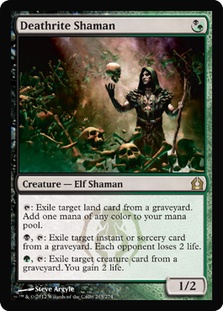
"We had it in our Jund list—played Cryptic Command instead."
The problem here was that this method of playtesting is highly flawed and doesn’t provide the opportunity to learn very much. One thing that can suck about preparing for Pro Tours is that the format of these events (in this case Modern) is completely different from the tournaments other people are playing and testing for, which means that if all of your local buddies aren’t also qualified for the PT, good luck finding somebody to play with you.
Magic Online is another option for playtesting. However, if one isn’t familiar with playing online and/or doesn’t have the cards, that option doesn’t help much either. My next Magical resolution is to start a Magic Online account and try to use it. But I digress…
So a couple of months ago, I went 1-5 at a Constructed Pro Tour and thought to myself, "Playtesting and practicing would certainly have prevented this embarrassing performance…"
Ah, I remember the good old days, heading up to RIW around five o’clock to test for the weekend’s tournament with local guys Patrick Chapin, Mike Jacob, Ari Lax, Kyle Boggemes, Phil Cape, Dan Clark, and Paul Nicolo, doing a 4v4 draft, and maybe playing a few games of "Are You A Werewolf?" Well, these days most of those players have left the state, and those who remain don’t have time or desire to actually playtest.
What’s a player to do? Start a brand-new playtest group?
Exactly.
Although I haven’t really had a serious playtest group to work with in months, the primary way that I "test" and prepare for events is to go to local tournaments with a deck and play five rounds of Swiss once or twice a week in the evenings. Over the course of playing local casual tournaments on weekdays, I got to know some of the more dedicated players and decided to ask these guys and gals if they wanted to start a weekly playtest group on Wednesday nights.
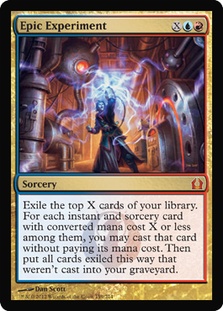
"Let’s start testing…"
My mission was simple: to keep the game store open as long as people wanted to hang out and practice playing MTG. People could bring whatever decks for whatever formats they wanted to work on and could focus on testing and practicing. There was a Modern PTQ that weekend in Detroit and a SCG Open Series in Columbus the following weekend, so I figured there were events on the horizon people would be interested in practicing for.
I was pleasantly surprised when fourteen players showed up Wednesday night to test! I was really impressed that there were so many players who were willing to spend a night a week practicing playing Magic—it just goes to show that there are a lot of players who really do want to improve.
Half of the players wanted to test Modern, and the other half wanted to test Standard. With so many players, anyone who wanted to get a game in had ample opponents to play against. I already had an invite to Pro Tour Dragon’s Maze because of a GP Top 4, so I spent most of my time focusing on proxying and playing various Standard decks, but I also spent some time watching Modern games and made time to 1-2 a Team Draft!
A Couple of Playtesting Tips
1. When you proxy up a decklist also proxy the sideboard of that deck, as it will make it easier to move from testing maindeck match ups to post-sideboard if the sideboard is already finished.
2. When you proxy the sideboard, write "SB" in the upper left corner of your proxies so that they are easy to retrieve from the maindeck after playing post-board games.
3. Make sure you test matchups post-sideboard! Everybody knows this is important, but most people don’t do it nearly as often as they should. For starters, a matchup can feel very even before sideboard, which can lead a person to believe the matchup is pretty even. However, if they get much better after sideboard, that even matchup is a lot more problematic and could lead to one deck being a much better choice for a tournament!
4. Alternate being on the play and the draw. In tournaments, the loser gets to be on the play, but in playtesting, switch on and off so that both decks get to play and draw equal times. Remember, the object of playtesting isn’t to win the session, it is to learn as much as possible so you can win a tournament in the future!
5. You don’t need to play a million games in order for playtesting to be worthwhile. In fact, I usually feel that playing more than six games of the same thing in a row is a waste of time. Sure, twelve games of pre-sideboard Mono-Red Aggro vs. Naya Midrange will give you a clearer picture of how the matchup works, but six games should give you a good idea of what is going on. Keep in mind that six pre-sideboard games and six post-sideboard games will give a player a much, much better perspective of what a matchup looks like than just twelve pre-sideboarded games.
Another reason why I like sets of six games is that once beyond that point people start to get frustrated. Six games of Magic is a lot. In a tournament, we get two hours to play six games of Magic. If one deck is favored, they are winning more than the other; trailing in a series 4-2 can be frustrating (as your opponent is beating you two to one). At about six games, it is nice to change gears and try something new. Getting to sideboard usually relieve some of the frustration of playing the bad side of a bad matchup.
6. Mulligan for real. Don’t draw seven again. Don’t draw six twice. Play how you would play in a tournament. Some decks can actually win on five cards; it is good to know that.
7. Try not to take losing or winning in playtesting personally.
"Wow, you are a lot more chill to play against in testing than in a tournament!" commented one of the local players while smashing my face in with Mono-Red Aggro. In playtesting, it shouldn’t matter who wins or loses because what is actually important is learning new information that will help in future tournaments.
8. If you don’t know what to do in an in-game situation, ask somebody!
One of the best things about having a group is that there are always many people who can help shine new perspectives on a given situation. I frequently find myself in a situation (especially when testing two decks I haven’t played before) where I have two lines of play and am not sure which one is the better one.
Rather than simply making one, it is better to try to figure out why one play might be better.
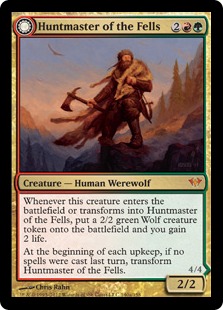
On turn 4, should I play a second Loxodon Smiter or Huntmaster when my opponent has permission up? Somebody suggested my opponent could have Detention Sphere as a reason to play the Master… Stuff like that.
Especially, if you are not sure: ASK!
9. Play more post-sideboard games than pre-sideboard games.
Most people have good maindecks. Most people understand what they are supposed to do against other popular decks in game 1. Most people have mediocre sideboards, don’t know how to use them, and are considerably worse in games 2 and 3.
This fact is even more important when one considers that we MUST win one post-sideboard game to win a match and that we don’t actually NEED to win game 1 to take the match!
10. When you actually have a playtesting group, each person needs to play much fewer games of Magic in order for the group to learn a lot more information because individuals can share information with each other. If you and your friend play five games and my friend and I play five games, together the four of us can play ten games in half the time!
With a group, more ground can be covered much more quickly than with only a few people. Also, the quality if your information will likely be better because there are more perspectives present, which makes it more likely that more things will get noticed.
Some Decks I Brewed Up
The first and most important thing that my fellow playtesters and I noticed was that aggressive red decks are very, very good. As most of these decks are based on curving out with creatures, midrange strategies with efficient removal would likely be a good counterstrategy.
The first deck I brewed up with help from D.J. is a deck that has a lot of weapons for attacking aggressive rush decks like Mono-Red Aggro, and Naya Humans, and W/R Aggro.


Creatures (17)
Planeswalkers (1)
Lands (24)
Spells (18)
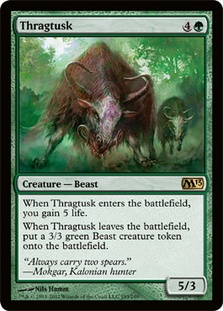
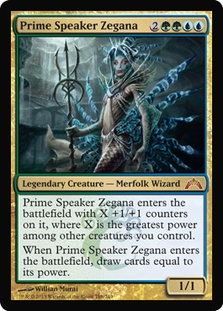
"Boom! Boom! Boom! Win."
A midrangey RUG deck that takes advantage of the best four, five, and six creature curve in the format; Huntmaster into Thragtusk into Prime Speaker is quite a beating!

"In one testing session, I used all three modes!"
Izzet Charm is another card that really impressed me. I like the way it is a 2CC Shock in a format where Shock is very good while at the same time gives a midrange / burn deck some foils to Sphinx’s Revelation.
The other deck I brewed up that I actually was very happy with is a U/W/R Midrange deck. And when I say "midrange," I mean MIDRANGE.
Creatures (12)
Planeswalkers (1)
Lands (25)
Spells (22)
One of the big things the group learned was that in all of the aggro matchups Boros Reckoner was the absolute blade. He was at the absolute worst a three mana two for one and at best a Moat that made opposing attacks impossible.
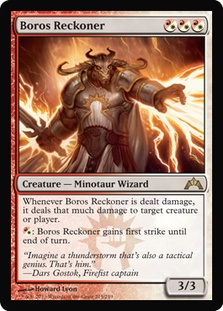
"If you can’t beat it, play it."
I noticed that Reckoner was the card that was beating my RUG deck, so I switched my midrange strategy to incorporate the powerful three-drop, and lo-and-behold it made a big difference. The other thing that is pretty sweet is that against all of the more aggressive decks a blocking Reckoner is much better than an attacking one!
Maximize Boros Reckoner and win (at least until people can start playing with control decks again)!
It is my thought that because very aggressive decks are so good and so popular at the moment (as is usually the case after a new set shakes things up), playing midrange decks tuned to beat red decks is probably a very solid move.
I felt like I learned a lot and brewed some pretty sweet decks, especially for only being the first playtesting session! Working with a group of people certainly has a lot of advantages…
Anyway, from here on out I will be testing every Wednesday evening and hopefully improving my Constructed game. If you are in Livonia, Michigan on a Wednesday and want somebody to practice with, you know where to find me.
Thanks for reading.
Cheers,
Brian DeMars